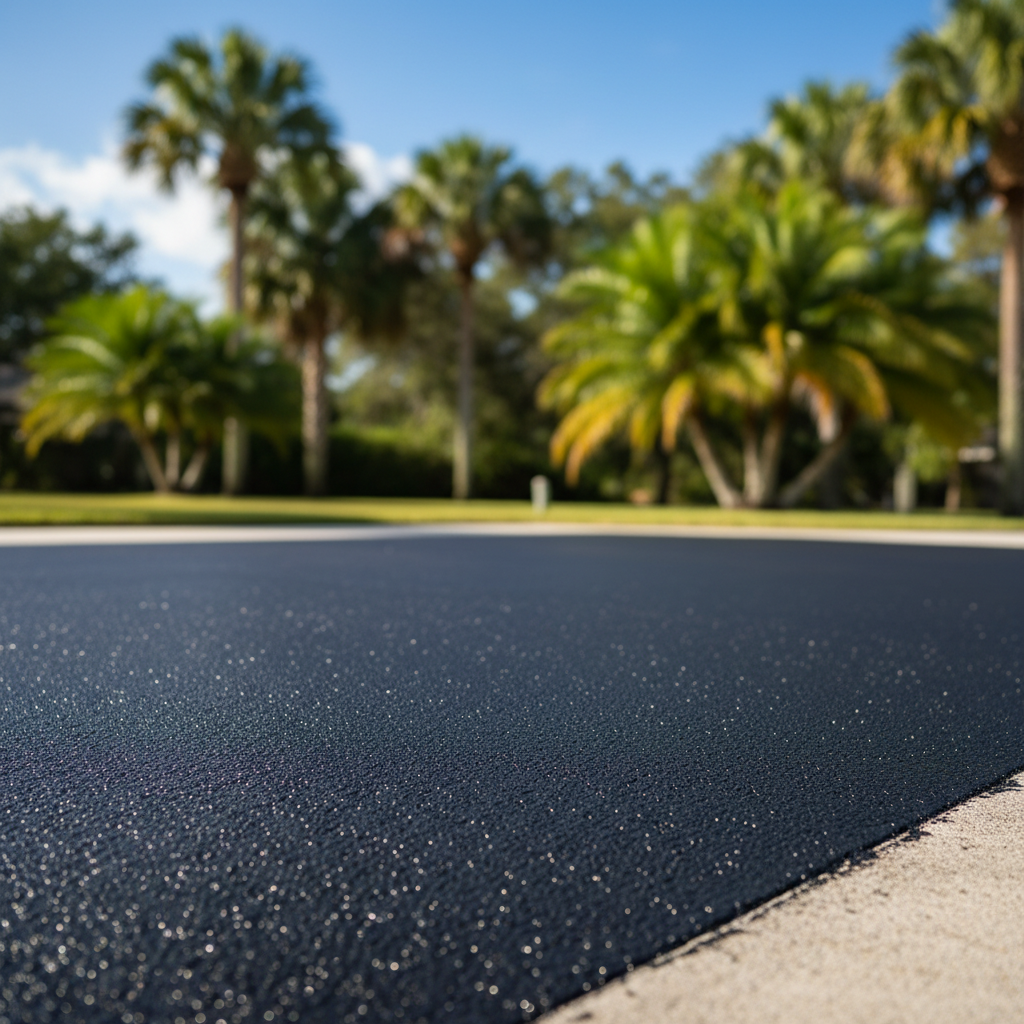
What exactly is slurry coating, and how's it different from sealcoating?
Alright, let's clear this up right away because people mix these two up all the time. You've probably heard of sealcoating, right? That's a thin liquid layer, usually asphalt emulsion, that goes on your driveway to protect it from the sun and water. Think of it like a fresh coat of paint for your asphalt.
Slurry coating, on the other hand, is a much thicker, more robust application. It's a mix of asphalt emulsion, finely graded aggregates (like sand or small crushed rock), water, and some chemical additives. Because it's got those aggregates in it, it doesn't just seal the surface; it actually fills in minor cracks and voids, smooths out rough spots, and provides a new wearing surface. It's a more substantial treatment, designed to extend the life of your pavement significantly more than a standard sealcoat.
When is the right time to get a slurry coat on my driveway?
Timing is everything, especially here in Florida. You don't want to do this when it's too cold, too hot, or when rain is on the way. Generally, we're looking for consistent temperatures above 50°F (10°C) and no rain in the forecast for at least 24-48 hours after application. That's crucial for proper curing. For us in New Port Richey, that usually means spring or fall are ideal. Summer can work, but you've got to watch those afternoon thunderstorms like a hawk. Applying it in direct, intense summer sun can also cause it to cure too fast, leading to issues down the road. We want it to cure slowly and evenly.
How long does a slurry coat last, and what affects its lifespan?
A good, properly applied slurry coat can last anywhere from 5 to 10 years, sometimes even longer if conditions are perfect and you treat it right. That's a big jump from sealcoating, which usually needs redoing every 2-3 years. What affects its lifespan? A few things:
- Traffic Volume: If you've got a busy driveway with multiple cars coming and going all day, it's going to wear down faster than a quiet one.
- Substrate Condition: If the asphalt underneath is in really bad shape – lots of deep cracks, potholes, or a weak base – the slurry coat won't perform miracles. It needs a reasonably sound surface to bond to.
- Weather Exposure: Our intense Florida sun and heavy rains can be tough on any pavement. While slurry coating is designed to resist these, constant exposure will still contribute to wear and tear over time.
- Application Quality: This is a big one. If the mix isn't right, or it's applied too thin, or the surface isn't prepped properly, you won't get the full lifespan. That's where choosing an experienced contractor like Pioneer Asphalt Co comes in.
Can slurry coating fix major cracks and potholes?
No, and this is a common misconception. Slurry coating is great for filling in minor surface imperfections, hairline cracks, and smoothing out rough textures. It's not a structural repair solution. If you've got cracks wider than about a quarter-inch, or any actual potholes, those need to be repaired *before* we even think about slurry coating. We'll patch those areas properly, let them cure, and then apply the slurry over the top. Trying to slurry coat over significant damage is just a waste of money; it won't hold up.
What's the process like? How long will my driveway be out of commission?
The process usually starts with a thorough cleaning of your driveway. We'll get rid of all the dirt, debris, oil spots, and loose aggregate. Any significant cracks or potholes get pre-treated or patched. Then, we apply the slurry mix, usually in one or two coats, depending on the condition of your pavement and the specific product we're using. It's spread evenly across the surface using specialized equipment.
As for how long your driveway will be out of commission, you're typically looking at 24 to 48 hours before you can drive on it. Foot traffic might be okay sooner, but we always recommend staying off it completely for at least a full day. The exact time depends on the weather conditions – humidity, temperature, and how much sun it's getting. We'll give you a precise timeframe when we do the job.
Is slurry coating a DIY project, or should I hire a pro?
Look, I'm all for homeowners tackling projects they're comfortable with. But slurry coating? This isn't like painting a fence. It's a specialized process that requires specific equipment, knowledge of mix ratios, and proper application techniques. If it's not mixed correctly, or applied unevenly, or if the surface isn't prepped right, you're going to end up with a mess, a shorter lifespan, and potentially more problems than you started with. You'll see streaks, inconsistent textures, and poor adhesion.
It's a significant investment, and to get the full benefits and longevity, you really need a professional who knows what they're doing. We've got the tools and the experience to make sure it's done right the first time. Plus, dealing with the large quantities of material and the cleanup isn't something most homeowners want to tackle.
How does the soil here in New Port Richey affect my asphalt and the need for slurry coating?
That's a smart question, and it's something we definitely consider. Here in New Port Richey, like much of Florida, we often deal with sandy, sometimes unstable soil conditions. This can lead to a few things. First, if the base layer of your asphalt wasn't properly compacted or designed for our soil, you can get movement and settling over time. This movement can cause cracks to form in your asphalt, even if it's relatively new. Second, our high water table and heavy rains mean moisture is always a factor. Water seeping into the base through cracks can further destabilize it.
Slurry coating helps by providing a strong, flexible, and impermeable barrier on the surface. It prevents water from penetrating those tiny hairline cracks and reaching the base layer, which is crucial for preserving the integrity of your driveway in our local conditions. It doesn't fix a bad base, but it definitely protects a good one from the elements that our local soil and weather throw at it.