What's the deal with slurry coating, and how's it different from sealcoating?
Alright, let's clear this up right off the bat because people often get these two mixed up. Slurry coating and sealcoating, while both put a protective layer on your asphalt, aren't the same thing. Think of sealcoating as a thin, liquid, almost paint-like layer. It's great for sealing the surface, blocking UV rays, and giving everything that fresh, black look. Mostly, it's about making things look good and offering some light protection.
Slurry coating, on the other hand, is a much thicker, tougher mix. It's got asphalt emulsion, water, mineral aggregate (usually sand), and some chemical additives thrown in. Because it includes that aggregate, it actually fills in small cracks and voids, giving you a more substantial wearing surface. It's like putting a new, thin skin on your asphalt, not just painting it. This means better protection against traffic wear and tear, and it can really extend your pavement's life more than a regular sealcoat ever could. We use it a lot on parking lots and sometimes even on bigger driveways here in New Port Richey, especially ones that see a lot of action.
Can I slurry coat over a really damaged or cracked driveway?
Look, I get it. You want your driveway to look good and last longer. But a slurry coating isn't some magic bullet for a beat-up driveway. If you've got major cracks, potholes, or areas where the asphalt is just crumbling away, a slurry coat won't fix any of that. It's designed to protect and refresh existing, fairly stable asphalt, not rebuild it from scratch.
Think of it this way: you wouldn't just paint over a wall that's falling apart, right? You'd fix the wall first. Same principle applies here. You'll need to repair those big issues — patch the potholes, fill the larger cracks — before you even start thinking about a slurry coat. If you don't, the slurry coat will just crack and fail right along with the damaged asphalt underneath, and then you've just wasted your money. We always inspect the surface first to make sure it's a good candidate for slurry. If it's not, we'll tell you exactly what needs to be done beforehand.
How long does a slurry coat typically last in our Florida climate?
That's a fair question, especially with the kind of sun and rain we get here in New Port Richey. Generally, a properly applied slurry coat can last anywhere from 5 to 10 years. Now, that's a pretty wide range, and a few things really influence it.
The quality of the initial application is huge. If it's not mixed right or applied properly, it just won't last. The condition of the asphalt underneath also plays a big role, like I just mentioned. And then there's the traffic. A residential driveway that sees a couple of cars a day will hold up much longer than, say, a commercial parking lot with heavy trucks constantly driving over it.
Our intense Florida sun and heavy rains can be tough on asphalt, but slurry coating is actually designed to stand up to it. The UV protection and water resistance it provides are exactly what you need down here. Regular maintenance, things like keeping it clean and addressing any small issues quickly, will definitely help you get closer to that 10-year mark.
What's the typical drying time, and when can I drive on it again?
This is probably one of the most common questions I get, because nobody wants their driveway out of commission for too long. The good news is, slurry coating dries pretty quickly, but you still need to be patient. Generally, you're looking at about 24 to 48 hours before you can drive on it, sometimes a little longer.
Several factors affect the drying time: the temperature, humidity, and even how thick we apply it. On a hot, sunny, low-humidity day, it'll cure faster. If it's cooler or really humid, like those sticky summer days we often have here in New Port Richey, it's going to take longer. We always recommend staying off it for at least 24 hours, and if you can manage 48, that's even better, especially for heavier vehicles. You don't want to leave tire marks or damage the fresh surface. Trust me, waiting a little longer is much better than having to fix a messed-up job.
Will slurry coating change the color or texture of my asphalt?
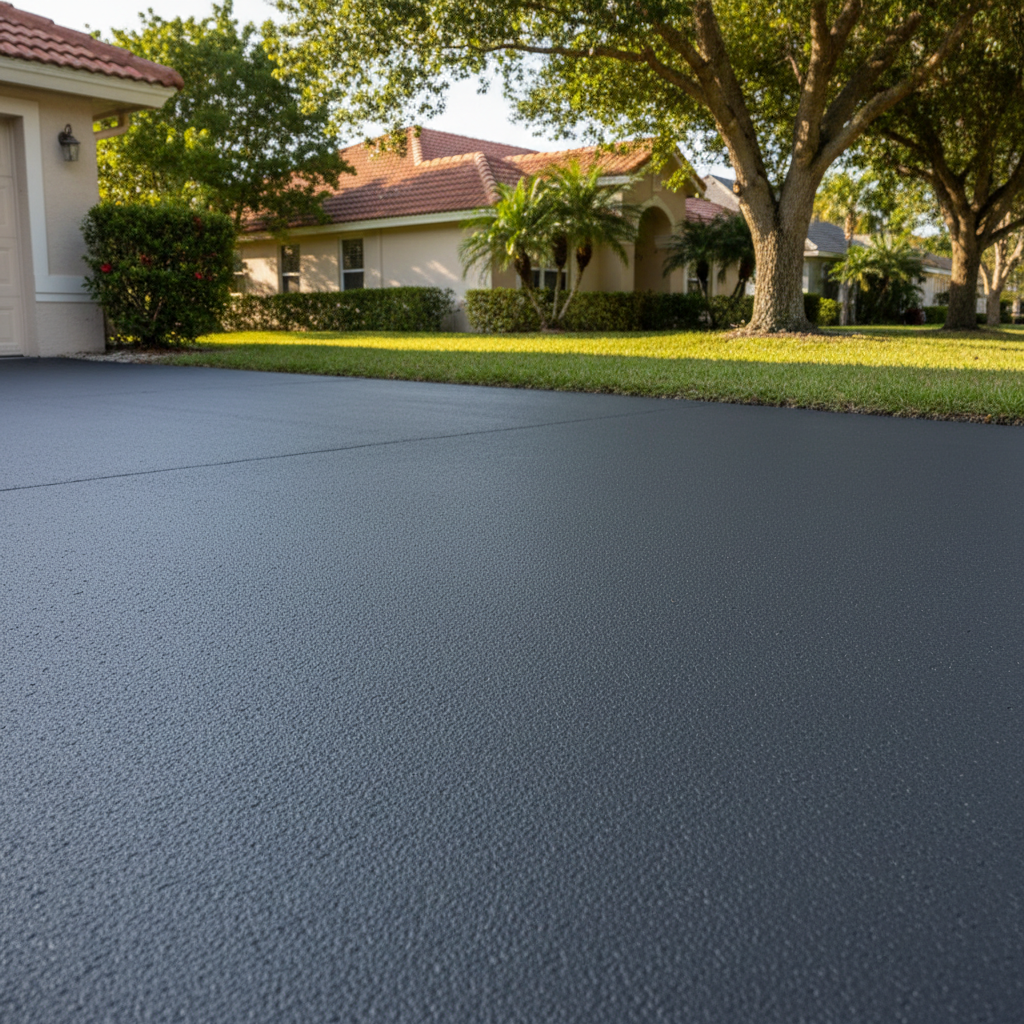
Yes, it absolutely will, and that's actually part of the benefit. A fresh slurry coat will give your asphalt a deep, rich black color. It really rejuvenates the look of faded, gray asphalt, making it look almost new again. It's a significant aesthetic upgrade, no doubt.
As for texture, because slurry coating contains aggregate, it's going to have a slightly rougher, more textured feel than a simple sealcoat. This isn't a bad thing at all. In fact, that texture provides better traction, which is a big plus for both vehicles and pedestrians, especially when the surface is wet. It also helps with the durability, as that aggregate takes the brunt of the wear. It's not going to be like a gravel driveway, but it won't be perfectly smooth like a fresh sheet of glass either. It's a good, solid, grippy surface.
Is slurry coating a DIY project, or should I hire a pro?
Alright, let's be straight. While you *can* buy slurry coating materials, this isn't really a DIY project for most homeowners, especially if you want it done right and to last. It's a much more involved process than just rolling on a coat of paint.
First, the surface prep is critical. You need to clean it thoroughly, address all repairs, and make sure it's truly ready. Then, the mixing of the slurry itself is precise. Too much water, too little aggregate, or not enough emulsion, and you've got a weak product that won't perform. Application requires specialized equipment for even spreading, and it needs to be done quickly and skillfully to avoid streaks, uneven patches, and premature failure. It's not like painting a wall where you can just take your sweet time.
If you're doing a small patch, maybe. But for an entire driveway or parking lot, you're better off calling in a professional like us at Pioneer Asphalt Co. We've got the experience, the right equipment, and we know how to handle the specific challenges of our local environment, things like the sandy soil and humidity, to get you a durable, good-looking finish. You'll save yourself a lot of headache and probably get a much better result that lasts longer.
How much does slurry coating cost compared to other options?
The cost of slurry coating is going to vary based on the size of the area, the condition of the existing asphalt, and the specific materials used. Generally, it's more expensive per square foot than a basic sealcoat because it's a thicker, more substantial product with aggregate. However, it's significantly less expensive than a full asphalt overlay or completely replacing your driveway.
Think of it as a middle-ground option. It gives you a lot more protection and longevity than a simple sealcoat, but without the much higher price tag and disruption of a major reconstruction project. For many homeowners and businesses in New Port Richey looking to extend the life of their pavement and give it a fresh look without breaking the bank, slurry coating offers excellent value. We can give you a clear estimate once we see your property and understand its specific needs.