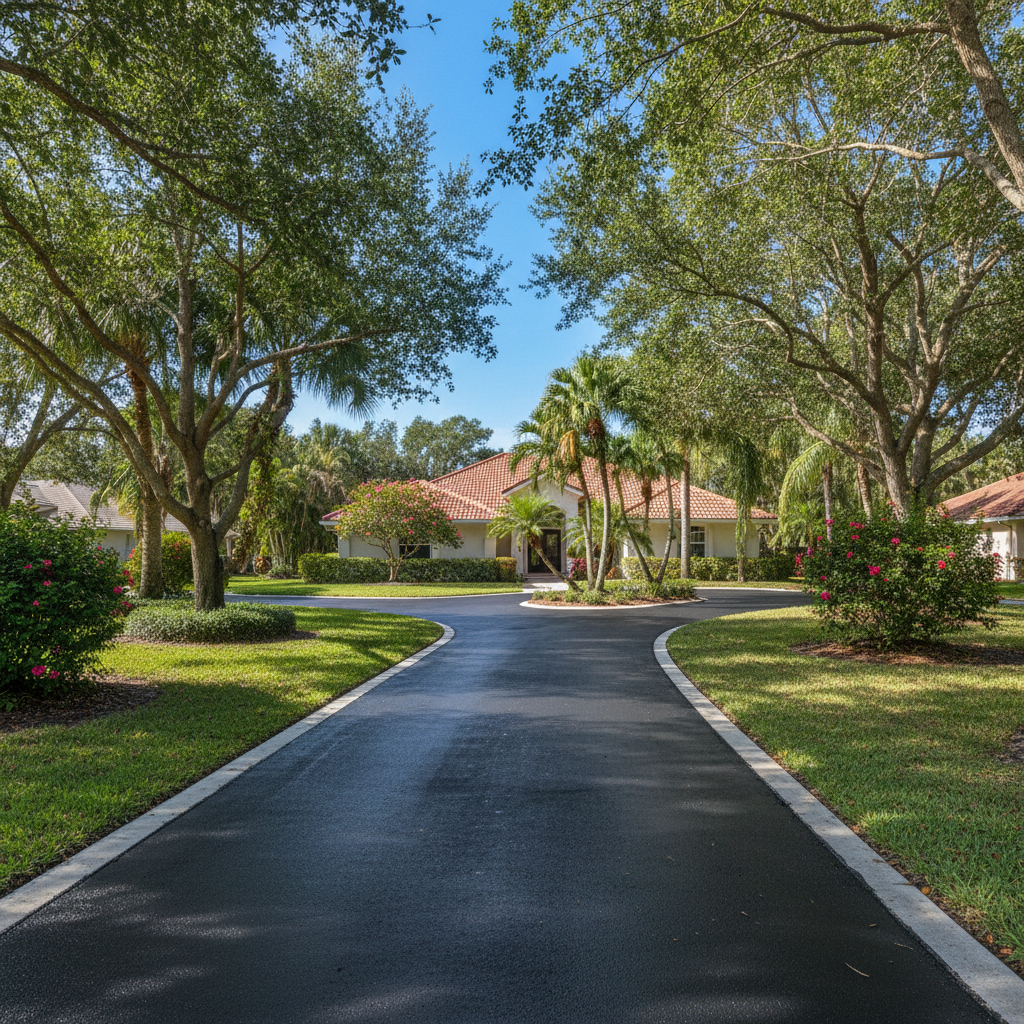
Okay, let's chat about slurry coating here in New Port Richey. You've got an asphalt driveway, right? And you know a good slurry coat protects it, makes it look sharp, and really stretches its life. But when's the best time to actually get it done? It's not just about picking a random weekend, especially with our Florida weather always keeping us guessing.
Why Slurry Coating Timing Really Matters in Florida
Slurry coating isn't just some paint job; it's a protective layer that needs to cure just right. That whole curing process? It's super sensitive to temperature and humidity. If it's too cold, it won't dry properly. Too hot, and it can dry too fast, which leads to cracks. And if it rains too soon, well, all that hard work and money can just wash right down the drain. Here in New Port Richey, we don't exactly have a "winter" like up north, but our seasons definitely impact this kind of work.
The Best Time of Year for Slurry Coating Your Driveway
From what I've seen over the years at Pioneer Asphalt Co, the real sweet spot for slurry coating around here usually falls in late autumn, winter, and early spring. Think November through April. Why those months, you ask?
- Lower Humidity: Our humidity levels tend to drop a bit during those cooler months. High humidity can really slow down the drying process, making your driveway unusable for longer. Plus, it increases the risk of problems if a surprise shower pops up.
- Moderate Temperatures: We get those beautiful 60-70 degree days, sometimes even low 80s, which are just perfect. The material can cure at a steady, ideal rate. You definitely don't want it applied when it's super hot and sticky, like in July or August. Why not? Because it'll flash dry on the surface but stay wet underneath, which often leads to cracking or peeling down the road.
- Less Rain: Sure, a cold front can bring rain anytime, but those predictable afternoon thunderstorms we get all summer? They're mostly gone. That gives us a much better window of dry weather to work with, and that's absolutely crucial for a successful cure.
Now, I'm not saying it's impossible to do in the summer, but it's definitely riskier. You're battling higher temperatures, higher humidity, and those daily downpours. If you absolutely need it done in summer, we'd have to be extra careful about the forecast and start super early in the morning to beat both the heat and the rain.
Weather Conditions We Keep an Eye On
Before we even think about scheduling, here's what I'm checking in the forecast:
- Temperature: We need consistent temperatures above 50°F, both during application and for at least 24-48 hours afterward. If it drops below that overnight, it can really mess with the cure.
- No Rain: This is a big one, perhaps the biggest. We need at least 24-48 hours of clear, dry weather after we apply it. A surprise shower can completely ruin a fresh coat, washing away the material or causing blotchy, uneven drying.
- Sunshine: A little sun is good, but direct, scorching sun on a hot day can make the material dry too quickly, leading to those tiny hairline cracks. Overcast but dry days are often ideal, actually.
- Wind: Moderate wind is fine, even helpful for drying. But really strong winds can blow debris onto the wet surface or even cause uneven drying.
You might live in a neighborhood like those around the Cotee River, where the morning dew can be pretty heavy. We always account for that, making sure the surface is completely dry before we start. No shortcuts there, ever.
Protecting Your Investment All Year Round
Once that slurry coat is down and cured, you've done a great job protecting your asphalt. But your job isn't quite finished. Here's how to keep it looking good and performing well:
- Keep it Clean: Sweep off leaves, dirt, and debris regularly. Don't let oil or gas spills just sit there; clean them up immediately with an absorbent material and a mild detergent.
- Avoid Heavy Loads: Try not to park heavy trucks or RVs on your driveway for extended periods, especially when it's hot. The weight can cause indentations or cracking over time.
- Trim Overhanging Branches: Sap from trees can be a real pain to clean and can degrade the surface. Plus, falling branches can cause damage.
- Address Cracks Promptly: Even with a slurry coat, small cracks can form over time. Don't let them grow! Fill them as soon as you see them to stop water from getting underneath and causing bigger problems.
- Re-Coat Periodically: A good slurry coat typically lasts 2-3 years, depending on how much traffic it gets and how much sun it sees. Keep an eye on it, and when it starts to look faded or worn, it's time to think about another application. Regular maintenance is absolutely key to extending the life of your driveway.
Taking care of your asphalt isn't just about making it look nice; it's about protecting a significant investment in your home. Get the timing right for that slurry coat, keep up with the maintenance, and your driveway will serve you well for years.