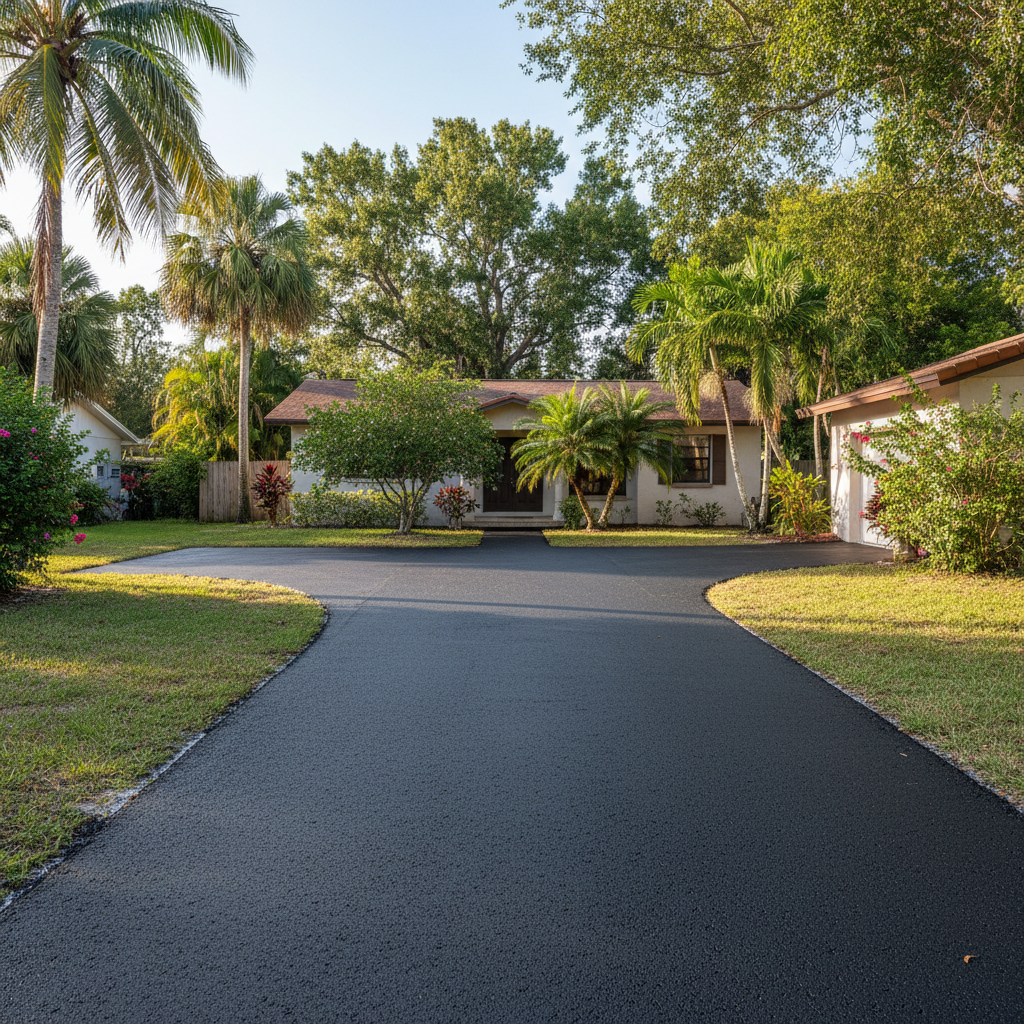
Alright, let's talk brass tacks about asphalt paving costs here in New Port Richey. I get asked all the time, “How much is this going to cost me?” And while it’s true that every job is different, I can give you some solid numbers and tell you what you’re actually paying for. You don't want to get ripped off, and I don't want you to be surprised, so let's clear things up.
What Really Drives Paving Prices?
When you're looking at a new asphalt driveway, parking lot, or private road, there are a few big factors that swing the price tag up or down. It's not just about the square footage, though that's a big part of it.
- Size and Scope of the Project: This is obvious, right? A small residential driveway will cost less than a sprawling commercial parking lot. But it's not always linear. Sometimes, very small jobs have a higher per-square-foot cost because we still have to get our equipment and crew out there.
- Existing Conditions: Are we doing a brand-new installation on virgin soil, or are we tearing out an old, cracked concrete slab? Demolition and removal add significant cost. If the existing base is shot, that means more work, more material, and more money. Here in New Port Richey, we often deal with sandy soil that might need extra compaction or even a thicker base layer to ensure long-term stability, especially in areas prone to heavier vehicle traffic.
- Material Thickness: How thick does the asphalt need to be? A standard residential driveway might get 2-3 inches of compacted asphalt over a good base. A heavy-duty commercial lot for trucks? You're looking at 4-6 inches or more. More material means a higher cost.
- Accessibility: Can our equipment easily get in and out? Tight spaces, steep grades, or obstacles that require hand-work instead of machines will increase labor costs.
- Drainage Requirements: Proper drainage is crucial to asphalt longevity. If we need to put in culverts, catch basins, or extensive grading to manage water runoff, that’s going to be factored in.
- Asphalt Market Prices: The cost of crude oil directly impacts the price of asphalt binder. These prices fluctuate, and a good contractor will reflect current market rates.
Typical Cost Ranges You Can Expect
Okay, let's get to some actual numbers for New Port Richey. Keep in mind these are averages, and your specific quote will vary.
- Residential Driveways (New Installation): For a standard 2-3 inch compacted asphalt layer over a prepared base, you're generally looking at $3.50 to $6.00 per square foot. This includes grading, base prep, and the asphalt itself. So, a typical 16x40 foot (640 sq ft) driveway could run you anywhere from $2,240 to $3,840. If we're tearing out an old concrete driveway first, add another $1.00 - $2.50 per square foot for demolition and removal.
- Commercial Parking Lots (New Installation): These projects are usually larger and need thicker asphalt. For 4-6 inches of compacted asphalt, expect $4.50 to $8.00 per square foot. This higher range accounts for heavier duty materials, more complex drainage, and often more extensive site prep.
- Asphalt Overlay (Resurfacing): If your existing asphalt is in decent shape but just needs a new surface, an overlay can be a cost-effective option. This usually involves cleaning, minor repairs, and then laying 1.5-2 inches of new asphalt. Expect $2.00 to $4.00 per square foot.
Remember, these are starting points. Don't just pick the cheapest guy; you'll often pay for it later in repairs.
What Should Be Included in Your Quote?
When you get a quote from Pioneer Asphalt Co, or any reputable contractor, it should be clear and detailed. Here’s what you want to see:
- Site Preparation: This covers grading, excavation, and making sure the sub-base is stable and properly compacted. If demolition is needed, it should be itemized.
- Base Material: The type and thickness of the aggregate base (e.g., limerock, crushed concrete). This is critical for a long-lasting surface.
- Asphalt Application: The number of asphalt layers, the thickness of each layer (e.g., binder course, surface course), and the total compacted thickness.
- Drainage Solutions: Any necessary grading, catch basins, or culverts.
- Edge Restraints: How the edges of the asphalt will be supported to prevent crumbling.
- Cleanup and Disposal: What happens to the old material and how the site will be left.
- Warranty Information: A clear statement of the warranty on materials and workmanship.
- Permits: Who is responsible for pulling any necessary permits from Pasco County or the City of New Port Richey.
How to Avoid Overpaying (and Under-Getting)
You want a fair price for quality work. Here's how to make sure you're not getting fleeced or, worse, getting a job that falls apart in a year.
- Get Multiple Bids: Three detailed quotes are usually enough. This helps you compare apples to apples and understand the market rate.
- Check References and Reviews: Don't just take their word for it. Call past clients, look at their work, and check online reviews.
- Ask for a Detailed Proposal: A one-line price isn't going to cut it. You need to know exactly what they're doing for that money.
- Understand the Scope: Make sure every contractor is bidding on the exact same scope of work. If one quote is significantly lower, they might be cutting corners or leaving something out.
- Don't Pay in Full Upfront: A reputable contractor might ask for a reasonable down payment (20-30%) for materials, but never the whole sum. Final payment should be upon satisfactory completion.
Paving is a big investment, and you want it done right the first time. Do your homework, ask the tough questions, and make sure you're dealing with someone who knows what they're doing and stands by their work. That's how we operate at Pioneer Asphalt Co, and it's what you should expect from anyone you hire.